What Makes In-Home Personal Training Worth It for Busy Professionals in San Francisco
San Francisco Personal Trainer | FRC Mobility Specialist | TPI Fitness Coach
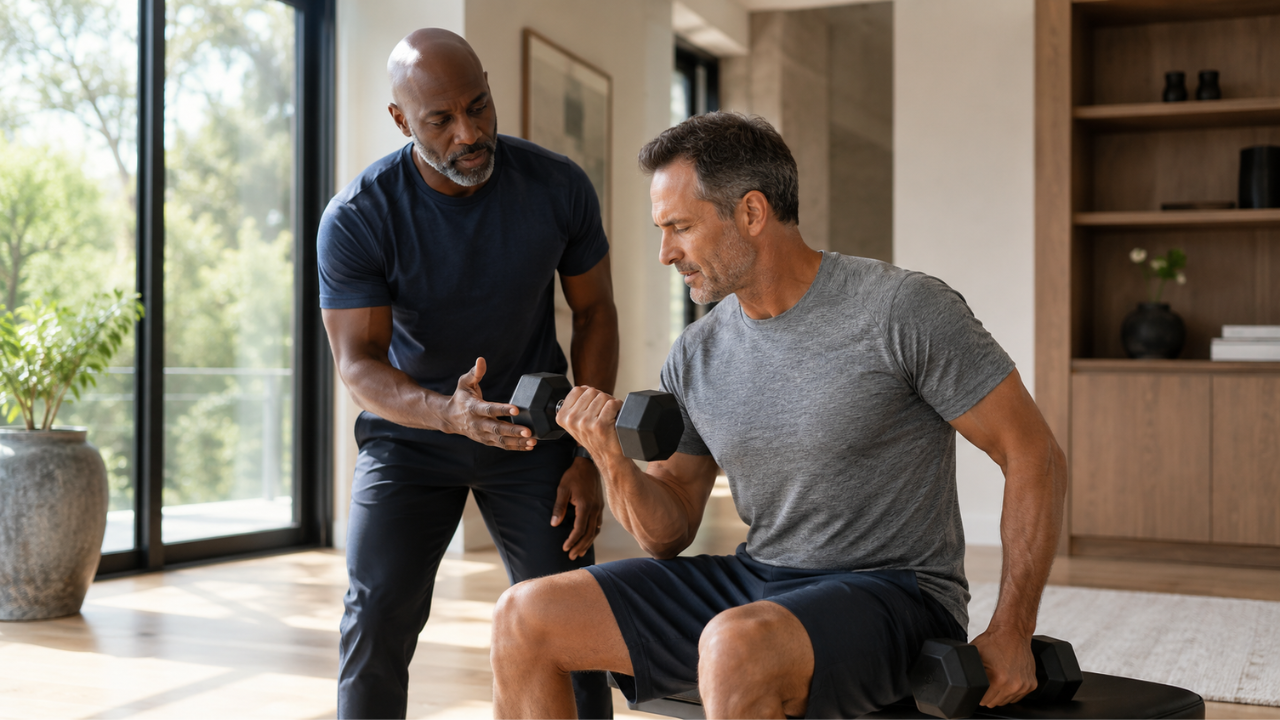
You already know you need to train. The question is how to actually make it happen with the schedule you have, not the one you wish you had.
For most professionals living and working in San Francisco and on the Peninsula, the gym model creates more friction than it removes. The commute. The parking. The crowded equipment. The 45 minutes you spend getting there and back that cuts directly into the part of your day that was already thin. The result is that training becomes one of the first things to get dropped when the calendar fills up, which it always does.
In-home personal training solves a different problem than most people realize. It is not just about convenience, though the convenience is real. It is about removing the gap between intention and action. When the trainer comes to you, the only decision you have to make is whether to be ready at the agreed time. That is a much easier decision to make consistently than the chain of decisions required to get yourself to a gym.
In-home training removes the gap between intention and action. The only decision you have to make is whether to be ready.
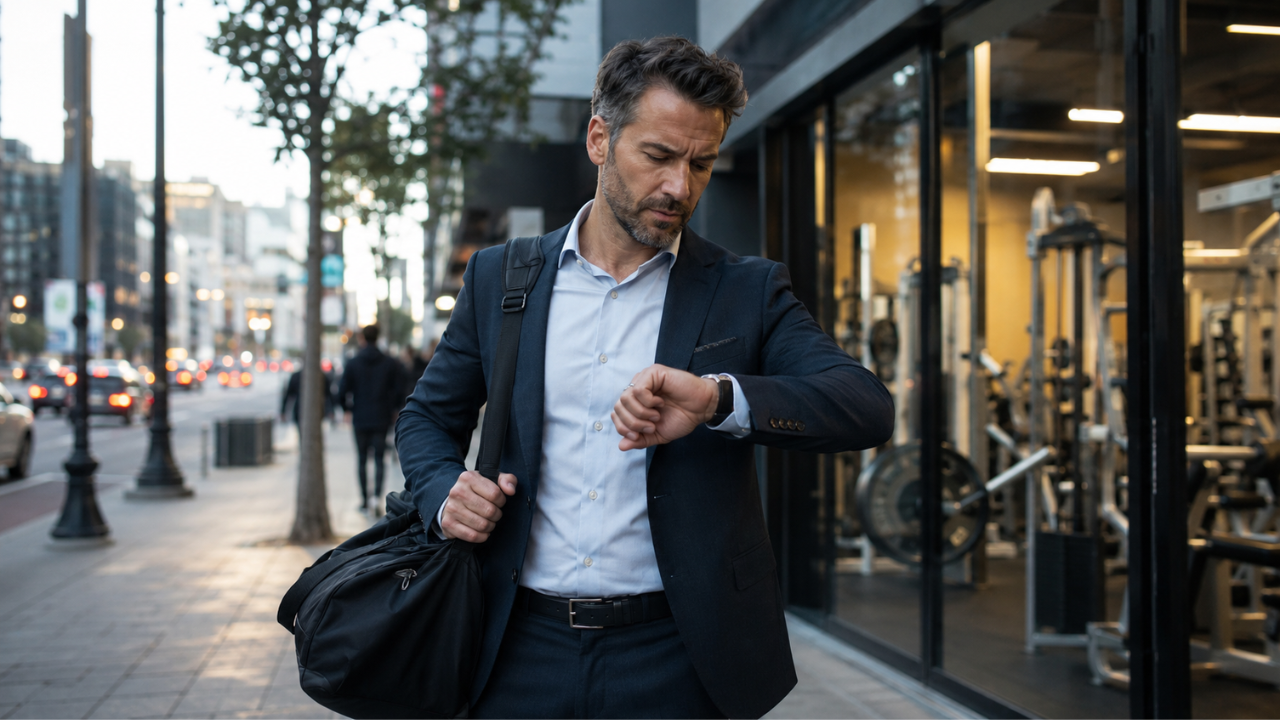
The commute to the gym is often where the session gets lost.
The Real Cost of Getting to a Gym
Most people underestimate what getting to a gym actually costs them in time and energy. A round trip to a commercial gym in San Francisco or Burlingame typically adds 30 to 45 minutes to a session that might only be 45 minutes long. That means the real time commitment is closer to 90 minutes, not 45. For someone whose calendar is already structured around back-to-back meetings and family obligations, 90 minutes is often not available.
Then there is the energy cost. Packing a bag, driving in traffic, finding parking, navigating a busy floor, waiting for equipment, and making yourself feel at home in a shared space takes a kind of low-level effort that most people do not account for. By the time you are actually training, you have already spent something. For an executive who has been in meetings since 7 AM, that spending matters.
The sessions that get skipped most often are not skipped because of low motivation. They are skipped because the friction of getting there exceeds the available bandwidth at that moment. Remove the friction and the session happens. It is that simple.
What In-Home Training Actually Looks Like
A common assumption is that in-home training is a lesser version of gym training. That without a full rack, cable machines, and a room full of equipment, the quality of the session is compromised. This is not accurate, and it reflects a misunderstanding of what actually drives results.
The majority of what matters in a training program; movement quality, progressive loading, appropriate intensity, and recovery management, does not require a commercial gym. What it requires is a skilled trainer, the right equipment for the individual, and an environment where the client can focus.
For most clients, the equipment I bring or use in their space covers everything their program needs. Adjustable dumbbells, kettlebells for loading. Resistance bands for joint-friendly work and mobility. A suspension trainer for bodyweight progressions. In some homes, there is already a dedicated space with a pull-up bar, a bench, or even a barbell setup. The program is built around what is available and what is appropriate, not around what a generic gym floor happens to stock.
The session itself is fully focused. There is no waiting for equipment. No one else working in your space. No ambient noise that pulls attention. Just the work, a bit of healthy conversation, the coaching, and the full hour curated for you. That quality of attention is difficult to replicate in a commercial environment regardless of how good the trainer is.
“That quality of attention is difficult to replicate in a commercial environment regardless of how good the trainer is.”
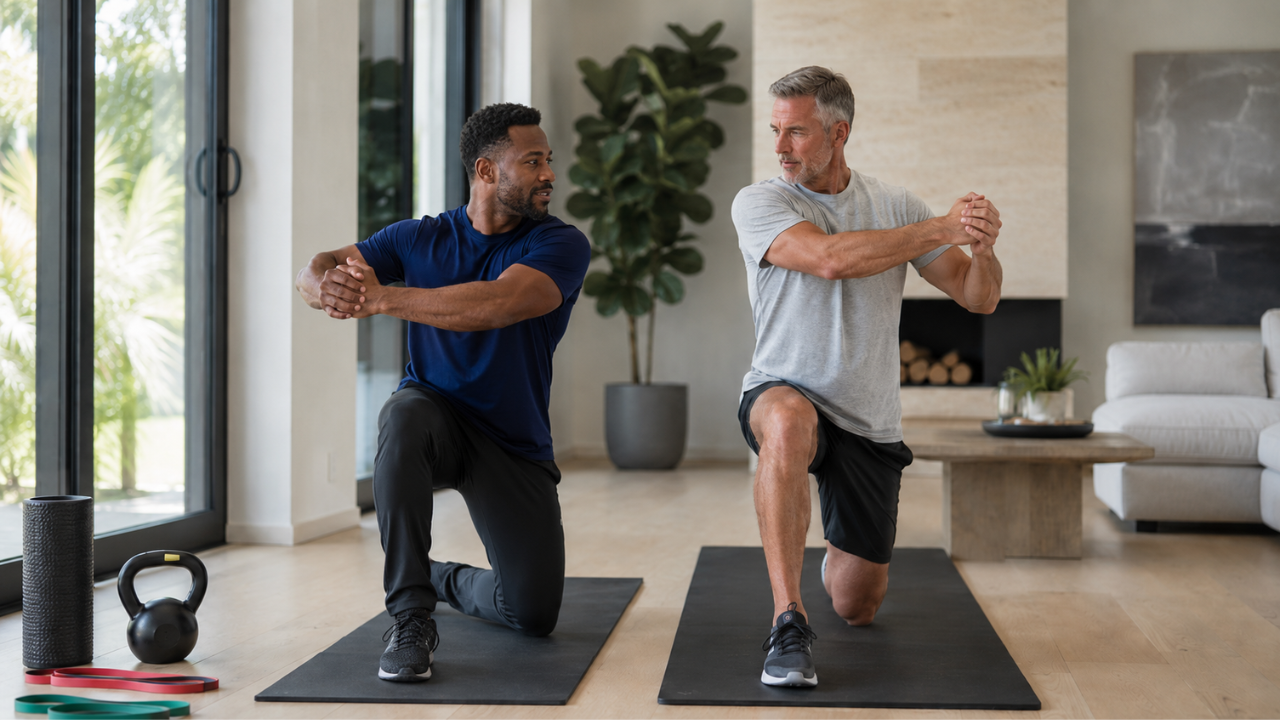
The environment shapes the session. A focused space produces focused training.
Who It Is Right For
In-home personal training is not for everyone. It works best for people whose primary obstacle to consistent training is access and friction rather than motivation or knowledge. If the thing standing between you and a regular training practice is the logistical difficulty of getting to a facility, removing that obstacle tends to change the outcome significantly.
The clients I work with in Burlingame, Hillsborough, Atherton, and Palo Alto are typically professionals in their 40s and 50s who have tried gym memberships, class-based fitness, or generic personal training before. They liked the idea of training consistently. They struggled with making it happen around everything else. In-home training gave them the structure without adding another obligation to navigate.
It also suits people who prefer a private environment for training. Many executives and high performers are not comfortable training in a shared space where their fitness level or their recovery from injury is visible to others. The home setting removes that layer entirely. The session is between you and the trainer, and that privacy tends to make people more willing to do the work that actually needs doing rather than the work that looks good.
The Difference Between In-Home Training and What Most People Have Tried
What I offer is not a trainer who shows up with a clipboard and counts your reps. Every program I build starts with a full assessment of your movement quality, strength, and body composition. That assessment tells me what your body actually needs, not what a generic program assumes. From there I build a program specific to you, and that program evolves as you do.
For clients in their 40s and 50s, that specificity matters more than it did at 25. Strength training for longevity looks different from strength training for aesthetics or for athletic performance. The movement patterns, the loading parameters, the recovery protocols, and the pacing of progression are all shaped by where you are, what you need to protect, and what you are building toward.
The assessment also means I know when to push and when to hold. The framework I use is to check access, control, and recovery before increasing intensity, applies every time we progress anything. You are not a program. You are a person, and the training responds to how you are actually doing.
“You are not a program. You are a person, and the training responds to how you are actually doing.”
In-Home Training in San Francisco and the Peninsula
I work with clients across San Francisco, Burlingame, Hillsborough, Atherton, and Palo Alto. For Peninsula clients, sessions take place in your home. The space does not need to be large. A living room, a study, or a spare bedroom with enough floor space to move freely is sufficient for a complete and effective session. For San Francisco clients, I work in-studio at Kauno SF (Outer Richmond District and SOMA locations). I also work with some clients at Back 2 Sports which serves the St Francis Wood, West Portal and Bernal Heights communities on Monterey Boulevard. Both are private training and Physical Therapy facilities that offers the same focused, distraction-free environment without requiring you to manage equipment at home.
In San Mateo I work out of Power Up Fitness located just south of the 92 Freeway. It’s a private training facility that is low traffic and quiet.
The number of clients I work with at any given time is intentionally small. That is what makes the level of attention and customization possible. If you are in one of the areas I serve and want to have a conversation about what a program built specifically for you would look like, I would be glad to connect.
Stop fitting your training around a gym. Let the training come to you.
I provide concierge in-home personal training in Burlingame, Hillsborough, Atherton, and Palo Alto, and private in-studio training at Kauno SF in San Francisco. Every program starts with a full assessment and is built around your schedule, your body, and your goals.
Learn more about in-home and in-studio training
About Coach Rich Thurman
Coach Rich Thurman is a personal trainer and mobility specialist with over 20 years of experience. He provides concierge in-home personal training in Burlingame, Hillsborough, and Atherton, and in-studio training at Kauno SF in San Francisco. Rich specializes in mobility, functional range conditioning (FRC), strength training for longevity, and sport-specific performance for golfers and other athletes. His approach is assessment-first, education-based, and built around the individual needs of each client. More about Coach Rich Thurman
Related Articles
The Assessment-First Approach: Why Knowing Your Starting Point Changes Everything
Strength Training After 40: Why It Is the Most Important Thing You Can Do for Longevity
3 Things to Assess Before Increasing Training Intensity
Why Mobility Training Matters More Than Stretching for Busy Professionals