3 Things to Assess Before Increasing Training Intensity
San Francisco Personal Trainer | FRC Mobility Specialist | TPI Fitness Coach

When progress stalls, most people reach for the same lever: push harder. More weight. Faster pace. A harder program. It feels logical if something is not working, do more of it. But this instinct, repeated often enough, is exactly why so many people plateau.
The assumption is that the limiting factor is effort. It often is not. What gets in the way of progress is far more frequently a quality problem in position, in control, in recovery and quality problems do not respond well to added intensity. They get worse.
Before you add load, speed, or complexity to any movement or training block, there are three things worth assessing honestly. Not as a formality. As a genuine checkpoint. I run through these with every client before we progress anything, whether they have been training for three months or three decades. The answer to each one determines whether adding intensity is actually the right move or whether better preparation is what the next phase actually requires.
““Quality problems do not respond well to added intensity. They get worse.””
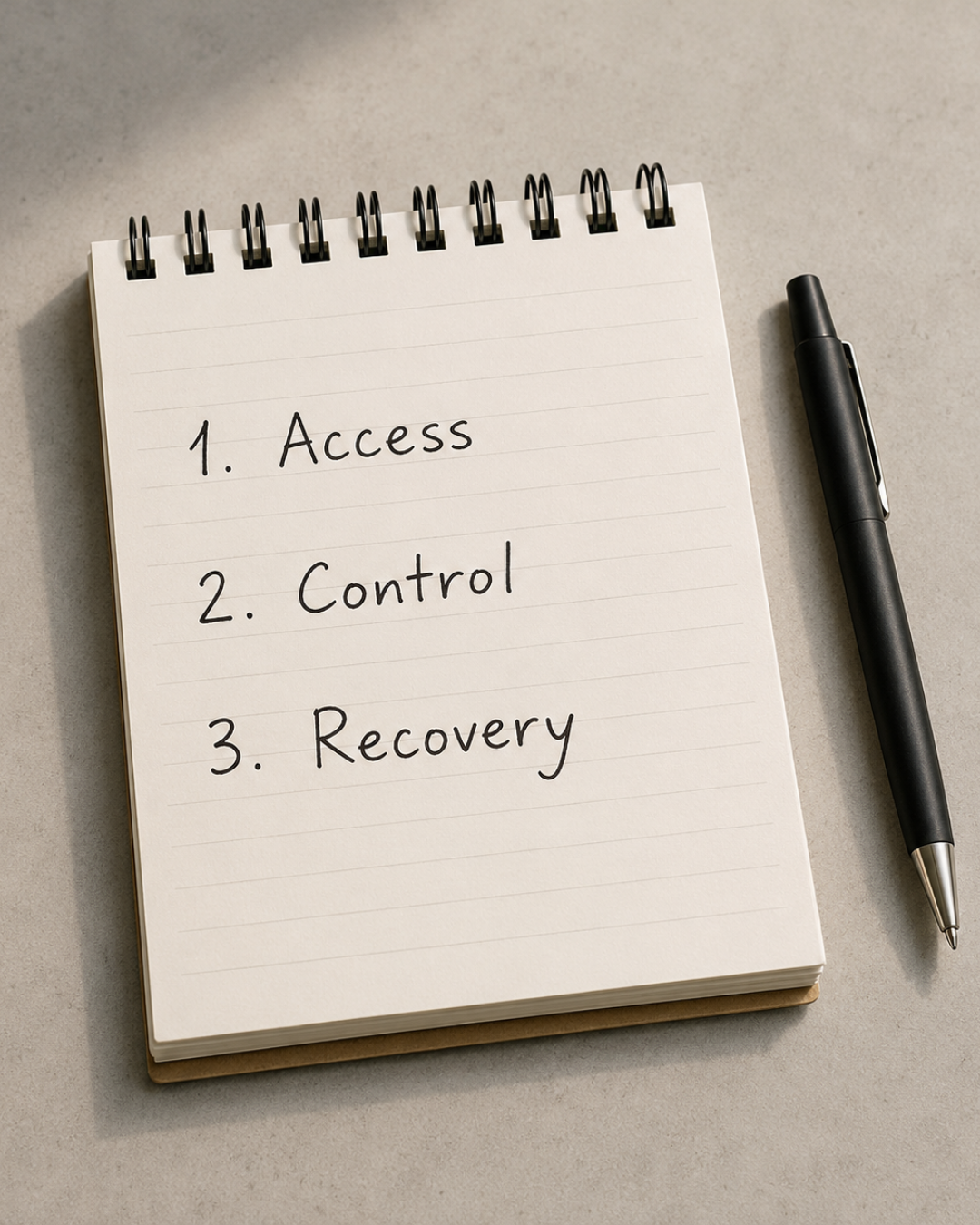
Check 1: Can You Access the Positions the Movement Requires?
Every movement has a positional demand. A squat requires a certain range at the hip, knee, and ankle. A press requires shoulder mobility and thoracic extension. A hinge needs posterior chain length and the ability to dissociate movement at the hip from the spine.
If you cannot reliably get into those positions, your body will find another way. It always does.
If restricted range of motion is the underlying issue, this article on mobility training explains why stretching alone rarely solves it.
The weight still moves but it moves through compensations, workarounds borrowed from parts of the body that were not designed to carry that load in that way. Over time, adding intensity to a compromised position does not build strength in the movement. It builds the compensation.
This is one of the more underappreciated reasons people get hurt doing things they have done many times before. The movement was never fully clean to begin with, and intensity eventually exposes what was always there.
The question to ask is simple: can I actually get into the positions this movement requires, under load, without having to work around something? If the honest answer is no, or not consistently, that is the first thing to address before anything else changes.
“Adding intensity to a compromised position does not build strength in the movement. It builds the compensation.”
Check 2: Can You Control the Movement Once You Are There?
Access and control are not the same thing. You might be able to reach a position passively sitting into a deep squat with your hands braced against a wall, for example, while having very little ability to load or stabilize that position under demand.
Control means you can move into and out of a range with intention. You can pause at the bottom of a squat and feel stable. You can lower a deadlift slowly without the position collapsing. You can press overhead without the shoulder shrugging or the lower back extending to compensate. These are not arbitrary technique standards. They are signals that your nervous system has actually integrated the movement and that it is not just tolerating a position but actively managing it.
When control is missing and intensity goes up anyway, what tends to happen is that the body finds the path of least resistance through the movement. The reps still get done. The weights still go up. But the pattern that gets trained is not the one you intended to train, and the load is landing on structures that were not built for it.
The test here is this: can you slow the movement down, pause at the hardest point, and maintain position? If the answer is no, the pattern is not ready for more. It needs more deliberate practice at a load where control is actually possible.
“Control means you can move into and out of a range with intention, not just tolerate a position.”
Check 3: Can You Recover From What You Are Already Doing?
This is the check that gets skipped most often, especially by people who are highly motivated and accustomed to pushing through difficulty. The assumption is that fatigue and soreness are signs the training is working. Sometimes they are. But they can also be signs that the body is not keeping up with the demands being placed on it.
The signals to watch for are specific. Persistent joint irritation that does not resolve between sessions. Sleep quality that has declined since training volume or intensity increased. Soreness that has stopped being a mild two-day response and become something that lingers. Motivation and energy that feel flat despite adequate rest. These are not signs to push through. They are the body communicating that it is not recovering from the current dose before the next one arrives.
When recovery is compromised and intensity goes up anyway, the body does not adapt; it accumulates. Accumulated fatigue masks fitness. Accumulated joint stress becomes injury. And accumulated motivational depletion becomes the kind of burnout that keeps people out of the gym for months.
The question is not can you handle more intensity, it is are you recovering fully from what you are already doing? If the answer is no, the next step is not a harder program. It is better sleep, a deload, or a recalibration of training frequency before anything gets added.
“Accumulated fatigue masks fitness. The next step is not always a harder program.”
Why This Matters More Than Most People Realize
These three checks, access, control and recovery, are not beginner concepts. They are the framework I apply before progressing any client, at any level, at any stage of training. The difference between someone who keeps making progress over years and someone who cycles through the same plateaus repeatedly is often this: one of them is honest about which problem they are actually solving.
Sometimes progress requires more challenge. A bigger squat might need more loading. A program that has been too conservative for too long might need to get harder. But sometimes progress requires better preparation, a few weeks of mobility work before adding load, a deload that lets connective tissue catch up with the demands being placed on it, or a sleep intervention that finally lets adaptation actually happen.
Knowing which situation you are in, and being willing to act on it, is a skill. It is also the thing that separates training that compounds over time from training that keeps hitting the same ceiling. The three checks are not a reason to avoid progress. They are the prerequisite for progress that actually holds.
“The goal is not to avoid adding intensity. It is to earn the right to add it.”
How to Run the Three Checks Before Your Next Phase
You do not need a formal testing session to apply this. Before your next training block or before you decide to increase load, take five minutes and work through the following honestly.
For Access
Go through the key positions of the movements you are about to load. Can you get there without compensation? Film yourself if you are unsure. The camera tends to show things the mirror misses.
For Control
Take your working weight and perform three to five slow, deliberate reps. Pause at the hardest position for two seconds. If the position breaks, that is your answer. The weight is ahead of your control.
For Recovery
Ask yourself four questions. Are my joints feeling recovered between sessions? Is my sleep quality normal? Is my motivation consistent with what it was six weeks ago? Am I recovering from soreness within 48 hours? If two or more of those answers are no, recovery is the priority before intensity is.
If all three checks pass, progress. If one fails, address it first. The next phase will be better for it, and more importantly, it will last.
Work with a trainer who assesses before he programs.
Every client I work with goes through a full movement and readiness assessment before we build a single training session. If you are in San Francisco, Burlingame, Hillsborough, or Atherton and want training that is built on what your body actually needs, not a generic template, I would be glad to talk.
Learn more about working together
About Coach Rich Thurman
Coach Rich Thurman is a personal trainer and mobility specialist with over 20 years of experience. He provides concierge in-home personal training in Burlingame, Hillsborough, and Atherton, and in-studio training in Monterey Heights and at two Kauno SF locations in San Francisco. Rich specializes in mobility, functional range conditioning (FRC), strength training for longevity, and sport-specific performance for golfers and other athletes. His approach is assessment-first, education-based, and built around the individual needs of each client.
Related Articles
Why Mobility Training Matters More Than Stretching for Busy Professionals
Hip Mobility for Desk Workers: What to Do When Sitting All Day Is Killing Your Range of Motion